
I trained as a painter, and I think I have pretty good design and color sense. That said, aesthetic sensibilities are subjective. People follow different principles which determine what they consider to be good design. When I planned which flowers to plant in which beds this spring, it helped me to articulate the two design principles that I most believe in:
Design Principle 1: Whatever you do, do it all the way.
Once in college I took a seminar on Set Design, and the teacher gave us an example I think of often.

For some production he had worked on, the idea for the set was to have a lot of furniture on stage, too much furniture, to give it a claustrophobic feel. But, he said: the trick was not to have just a lot of furniture— a lot of furniture would look cluttered and ugly, unaesthetic, and might even be perceived as a mistake, a bad design. No– the right way to go about it was to have so much furniture you couldn’t see the walls or the ceiling or the floors. The whole set was furniture. It was everywhere. There was so much of it, it became its own singular thing, like a texture rather than a group of objects. That’s taking the idea all the way to its logical extreme. It was striking, it was bold, it conveyed the idea, and it looked enormously purposeful. Good design.
I took this approach when planning the flower beds.
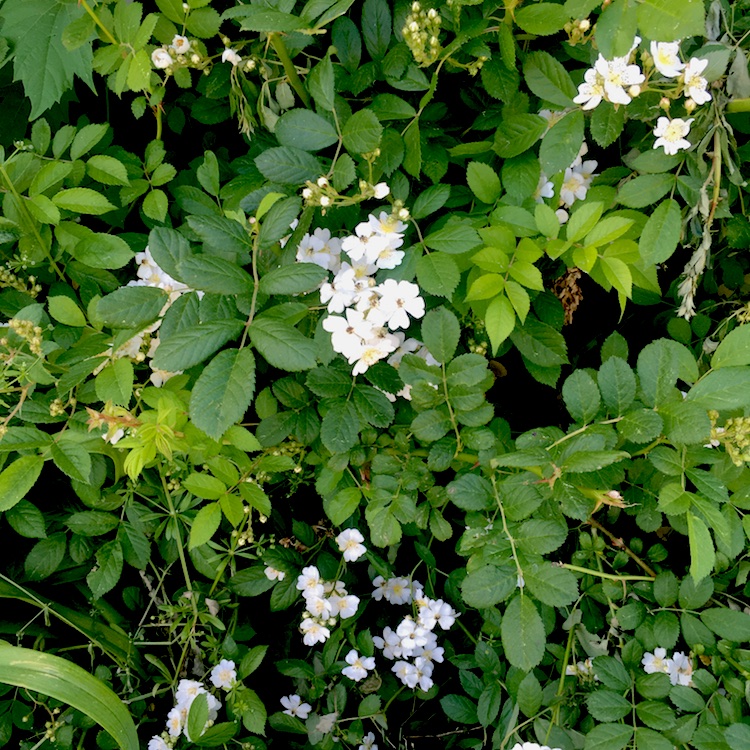
Whatever you do, do it all the way.
So I put all of the hot, vibrant multicolored pinks and oranges altogether in one bed. All of the blues, purples, and cool pinks in another. The yellow bed is all shades of yellow: golden marigolds, Teddy sunflowers, and lemonade cosmos.
For a delicate bed, I put in only delicate flowers: pale lemonade cosmos with baby’s breath.
Like the furniture in the set, each of these beds should, in theory, present as a texture and a statement unto itself.
What I don’t like in design is the opposite of this: compromise. I find compromise very unstylish. Balancing this idea with that idea, rather than taking this idea all the way.
It may seem like it would be unsophisticated, childlike, clumsy to take an idea to its extreme— but I think it’s often the stronger design choice.
Design Principle 2: Let the thing be exactly what it is.

Some will disagree with this, but I feel strongly about this one too.
I like to let things be the exact things that they are. I don’t like for things to be different just for the sake of it. I don’t like things to be made from the “wrong” material to be innovative or quirky. Call me boring; it drives me crazy though.
Sometimes this principle dovetails perfectly with Principle 1, but sometimes it directly contradicts it. It’s putting all the brakes on instead of going full steam ahead.
I’m not sure that I have any strong examples of this principle from my own garden this year, but this is how I’d describe it, as relates to gardening:
I like to see a pale pink English rose garden, that’s just that, and nothing more that that. Clean, simple, sweet, classic, old-fashioned. There’s something equally confident about the restraint of just letting it be what it is.
It’s a little different from “elegance” which is usually a little pretentious, or “simplicity” which can be uninspiring. I think of it more as “appropriateness”.
I think we’re seeing this design trend gaining traction in the past few years; a return to basics, a reaction against the fuss of rampant, prolific overproduction.
When the flowers bloom, I’ll update with pictures, and you can judge for yourself if these design principles work for the garden.
What design principles dictate your aesthetic sensibilities?
 From the Garden