I originally trained as a painter, so I often find analogs with painting whenever I learn a new discipline.
Lighting Design, for instance- something I did for work at a concert hall during my twenties, was a lot like painting— layering colors to effect emotion— but painting fast, and from a distance. Satisfying, but ephemeral: nothing left behind after the concert ended. (Photographs never do lighting design justice.)
Graphic design, which I did for a while working in marketing, felt like painting without any soul. Digitally produced art can’t convey meaning the way that something labored over physically can- something touched by your hands. That’s why museums still exist- seeing a piece of art in person isn’t the same as seeing an image or print of it. The object itself conveys meaning in a way that a copy of it doesn’t.
And when I started sewing and woodworking for some art projects, these just felt like painting in three dimensions. One pliable, one not. Constructing with shapes and colors, just drawing them out into real space instead of leaving them on the surface.
Etc, etc- everything I learned, I related to painting.
So if you’d told me before I started gardening that I would find it similar to painting, of course I would have believed you. It’s working with tangible materials. It’s working with colors. It’s messy. It’s about starting with a vision and then slowly teasing it out of the canvas.
My garden is my most beautiful masterpiece.
Claude Monet
But after a few weeks of gardening, I realized something that there was something completely different about the analogy this time.
Yes, I thought to myself absently as I plucked weeds out of a flower bed one afternoon— yes, gardening is a lot like painting, but it’s like painting with someone painting back.
And that was completely new to me.
You get a bit of that feeling when you paint. The paint gives you some feedback. It responds to your brush— sometimes the way you want it to, sometimes not. It can be hard to manage. It can create an unexpected effect, give you a new idea.
But it doesn’t have a whole plan of its own. It doesn’t surprise you overnight with new parts of the canvas filled in for you. Lighting design, sewing, woodworking- the materials respond to the way you handle them, but they don’t execute their own ideas when you walk away.
But in the garden— I envision certain things, just like with any art project:
This flower bed will be shaped so; these flowers will grow here; this color will dominate here….
I work diligently on it all day.
Then I come back in the morning, and Nature has disagreed with me.
“I see you mounded the land here; interesting”— it says—
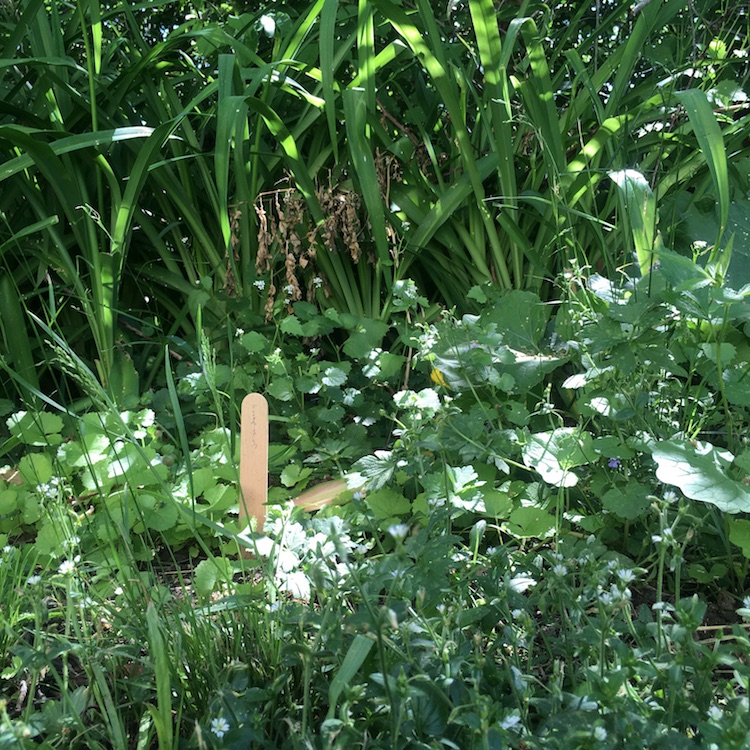
“I flattened that with rain and added a new mound over here instead. The seeds you planted in a row: no, I clumped them together. See, here’s the sprout clump. And you’ll notice this bed looks completely different today, because the surprise weeds are doing great. Also, here’s a dead mouse. I’m honestly not sure what happened there.”
Once I had this realization, gardening became really exciting.
Back and forth: friendly parrying. Every day, new ideas on the table.
For years I’d wanted to collaborate on project with other artists and writers. I’d put a lot of effort into trying to convince people to work together, but never had managed to get anyone on board for long.
But now, without trying, I’ d found a collaborator! And not only that, but my new collaborator was Nature— which is a bit like getting Franco Zefferelli to direct a Tik-Tok video.
Which of course brings me to the question….
Am I really the painter in this analogy? The idea of Nature being a collaborator seems pretty hubristic, doesn’t it?
I’ll leave you to draw your own conclusions… I’m still working on mine.
 From the Garden