Straight lines– why do we do straight lines in gardens?
Is it because it feels more organized? More proper? Easier to manage?
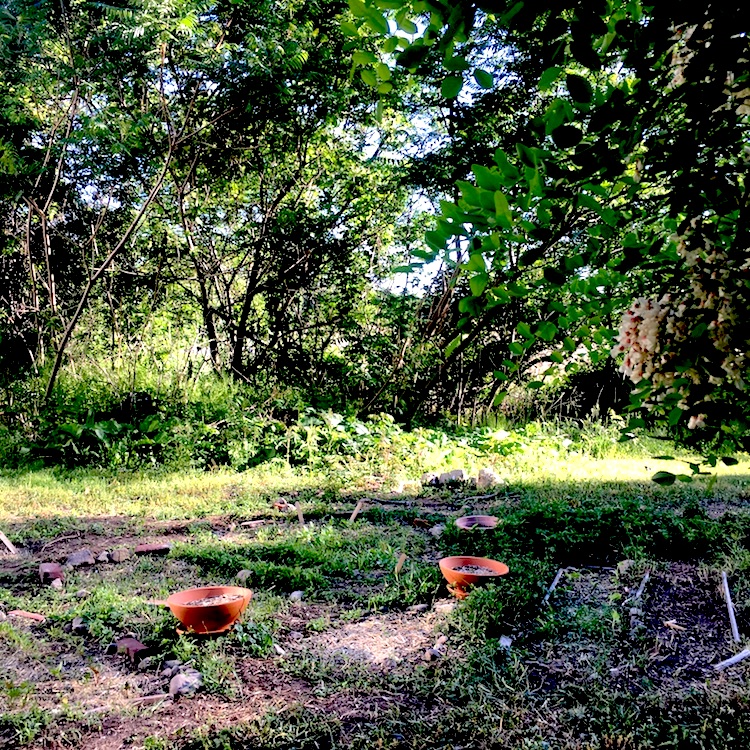
I think there’s a time and place for straight lines in gardens. The long-rowed rectangular vegetable garden must be easier to harvest. A tidy formal garden feels right in a brick-walled city backyard. Along the walkways in an institutional setting, like a bank or a school, where you want to convey the feeling that everything is properly controlled and overseen– straight lines, maybe, yes. Perhaps.
But rectangular flower beds in the backyard garden? Why?
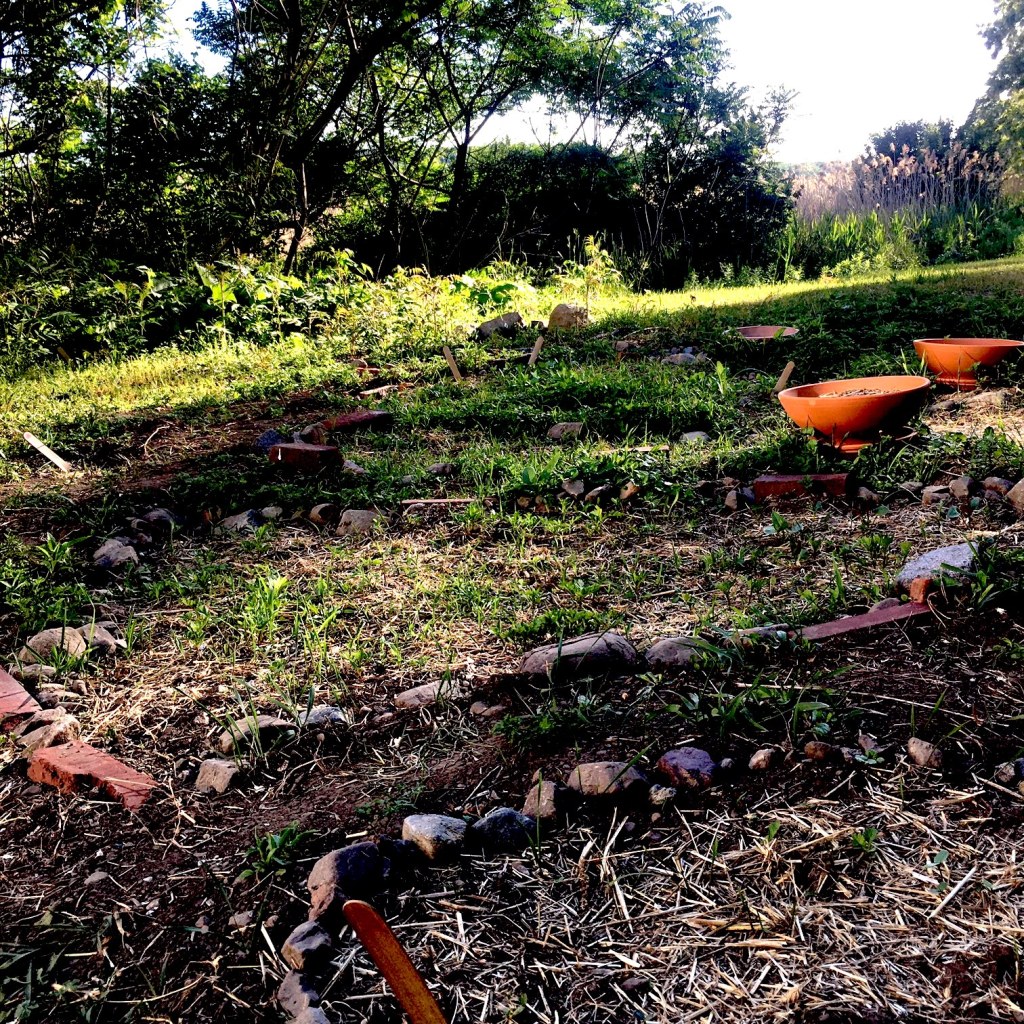
When I began preparing the land, I set out to make my first flower bed a rectangle, without thinking about it much— but very quickly felt how inorganic this was. As I began to encounter roots and large immovable stones, I realized I could either disrupt the roots and the stones, or simply change the shape of the bed to work around it. Just as a stream of water will take the path of least resistance- and in the process, will form a beautiful, winding path- I could respond to the earth and rather than trying to align it to a grid.
With this new approach, I ended up with irregular, pond-like shapes. Which look, I think, more beautiful, and more appropriate- almost as if they grew there naturally.
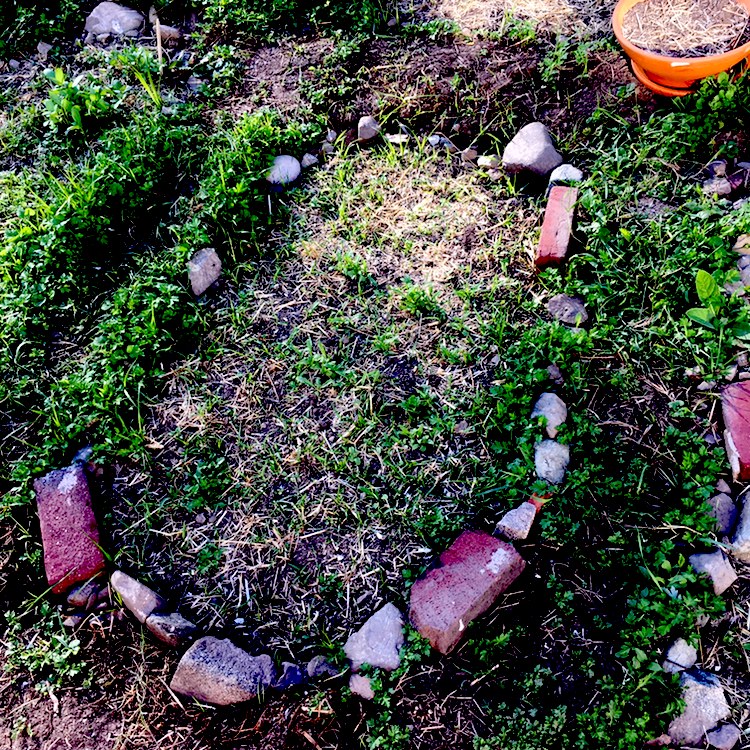
The same goes for borders. Even a curved bed looks inorganic when it’s aggressively bordered all around with bricks or pavers. Nature isn’t usually as tidy as humans try to make it.
To try to keep a natural feel, I used the stones I found while turning the soil, and a few bricks that were lying around. It provided definition around the beds and formed natural paths between them.
All the weeds we pulled up while planting I laid out along the newly formed paths. It was a little nicer to look at than bare dirt- and after only a couple weeks, new fresh greens have sprouted on the paths.
And now I’ve started to think about how thinking like Nature can work in areas outside of gardening.
If you’re an artist, you’ll already know how this principle applies to art. The least interesting art is what you planned out in advance. The most interesting art comes from responding moment-by-moment to the process.
But even in daily life, can we break out of our gridded way of thinking a bit, and see what happens? Try to resist straight lines for a while, and the type of ordered thinking that they promote. Try writing your next notes or list all over a blank piece of paper, rather than filling in the lines on a ruled one. Do new ideas emerge from seeing things side by side that your normal, ordered way of thinking wanted to separate?
I think if we embraced these ideas more, we’d find not only gardening but also daily life more intuitive and organic.
 From the Garden